- Two ponds in Podvinci
-
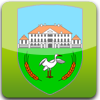
Not far from Ptuj, close to the village of Podvinci, there are two ponds: a big one and a small one, called »Pacinje« and »Tičnica«. The ponds are at least 200 years old and are mapped in the old Austrian Joseph's cadastre. It is supposed that Maria Theresa intended to use them for provision of the army with fish. Since their creation until today, the ponds in Podvinci are together with the forest that surrounds them, a heaven for many different species of animals and plants. Due to some rare species which are almost extinct elsewhere, the ponds with their surrounding are protected as a nature reserve. The ponds are defined as an European important area for conserving nature as well — the Natura 2000 area.
- Mithras Shrine III
-
Mithraism is a mystic religion and it was forbidden to write about it. It originates from Persia and was brought here by Roman officials and soldiers. Religious rites could be attended only by men since the religion was secret.
In the western part of the Roman Po-etovio, on Zgornji Breg, there was the largest Mithras Shrine placed in a dense residential quarter of the town. It was discovered by Viktor Skrabar and PhD Mihovil AbramiE in 1913. The Shrine is conserved under a protected building which was already the following year repaired by the museum association with voluntary contributions. In the shrine, built in the middle of the 3rd century, dominate the altars with dedications from the soldiers of Legio XIII Gemina and V Macedonia, under the command of Flavius Aper. The shrine is tripartite in the longitude and has a sunk medium part. On the wall, opposite the entrance there is a fresco - a copy of the altar relief from the Mithras Shrine in Osterburken.
- Monument Park — Old Town Cemetery
-
Along Volkmerjeva Street there is an old cemetery which is today a monument park as well. Many tombstones keep the memory of well-known people of Ptuj and the centre of it is the obelisk placed on the tomb of the combatant belonging to the Slovenjegoriška troop. In the vicinity there is a monument dedicated to the national war hero Joie Lacko. On the cemetery you can find graves of soldiers form the World War I and graves of Yugoslavian soldiers from 1941.
- The Statue of St. Florijan
-
In the centre of the Town Square, in front of the Town Hall, there is a monument of the patron St. Flori-jan who protects the town against fire which had affected the town. It was erected by the citizens of Ptuj in 1745.
- Town Hall
-
In Town Square there is a town hall. This is an eminent building from the beginning of the 20th century; today it houses the headquarters of the Ptuj Municipality.
- Roman Brick Kiln
-
On the area of the ancient artisan's quarter of the old Poetovio, numerous clay kilns and brick kilns were discovered. One of them is displayed on the same place as it has been discovered. A shop opposite the brick kiln is named after it and the whole area there is called Roman platform.
- Orpheus Monument
-
In front of the city tower, in Slovene square, there is a mighty antique marble tombstone with engraved scenes from the Orpheus myth and there comes the name: Orpheus Monument. In the Middle Ages the tombstone was used as a pillory – pranger.
- Povoden's Museum
-
In 1830 Roman monuments were inbuilt in the foothills of the City Tower by Simon Povoden who had found them on the area of ancient Poetovio. Therefore Ptuj got the first open-air museum »sub divog (under the clear sky), the museum was named after his creator – Povoden's Museum.
- City tower
-
On the Slovene square, along the Church of St. George, a high, seen from far, mighty tower raises and it was already built by the citizens of Ptuj in the 14th century. The Tower is a proof of power, richness and importance of the town of Ptuj.
- The Church of St. George
-
The parish church of St. George was built on the east part of the oldest Ptuj and despite many refurbishments shows mainly a Gothic look. In 1863 the Church of St. George became a provost's church. Below the choir, under the glass bell, there is a wooden gothic statue of St. George from 1380 who is also a patron of the church and of the whole town.
- Ptuj Castle
-
The castle hill has already been settled since the 5th millennium BC. The inhabitants of antique Poetovio built a fortress and temples there, and in the Early Middle Ages a Slavonic burial place was there.
- Plague Column at Drage
-
A column with a thick lower part serves as a foundation to a wide little house with saddle-shaped niches. It was erected in the nineteenth century. The column is located at an isolated spot in Drage, to the south of Vitomarci.
- Ice House
-
Near an outbuilding belonging to To family at Drbetinci 3 is a well-preserved ice house, which used to serve the needs of a former inn and is worth seeing.
- St. Andraž Church
-
Until 1415 the area belonged to the Ptuj Archdiocese. After 1415 these settlements became a part of the St. Lawrence Parish (today Juršinci), while both belonged to the Ptuj Diocese. Its chaplaincy was mentioned in the protocol between the years 1585 and 1615. It temporarily became a parish in 1757 and permanently in 1782. In 1819 curate Franc Vrbnjak introduced a fair on the day of the parish patron saint St. Andrai, that is on 30 November. The parish chronicle also mentions a few folk missions, which were led by Jesuits, Lazarists and Minorites from 1870 onwards.
- Simonič's Homestead
-
The wooden „cimprača" from the second half of the eighteenth century was built in the shape of the letter L and is one of the rare preserved Pannonian houses in Slovenia, from this reason it became a cultural monument.
- Snake's Head
-
Snake's head (scientific name Fritillaria meleagris, in Slovenian močvirska log-arica) is a flower from the family Lili-acese which grows in Europe. It has a flower with six petals in the shape of a bell, the petals look downward and have a chequered reddish-brown colour. Some species may also have white petals.
- The Grey Heron Nesting Place
-
In the area of the municipality there is a grey heron nesting place and the site of Snake's Head Fritillary. The grey heron colony is located along the road between Biš and Gočovo in Slovenske ulated Pesnica River. The colony nests gorice, on the embankment of the reg- on alder trees in alder wood, which used to be a swamp until the Pesnica River was regulated.
- Roadside Sign
-
Before the village there is a stone column with niches. In the deeper niche of the upper part there is a statue. It is covered with tiled roofing. The sign, which has been re-made, was erected in 1788.
- Stephen's Chapel (Kranjc Chapel)
-
A rectangular chapel with a wooden bell tower and tiled roofing. It was built at the beginning of the nineteenth century to remind of the plague which murdered livestock.
- St. Bolfenk Church
-
St. Bolfenk Church from 1789 is a typical representative of Josephian sacral buildings from the last third of the eighteenth century. Its predecessor was a large graveyard chapel. The construction works to build the church started in 1786, using the material from the urban graveyard Sv. Bolfenk Chapel and St. John Chapel from Grabrniški Vrh near Sv. Lovrenc in Slovenske gorice. It took more than two years to build the church and the parson's house. At the beginning, the appearance of the church was not the same as today, especially as regards the wooden ceiling, which was vaulted as late as in 1880.